
The National Group of Expertise on Pancreatic Cancer Research (KNEP) consists of nine research groups from Oslo, Bergen and Stavanger. Through a joint 5-years project supported by the Norwegian Cancer Society, the groups have bundled their research activities to improve early diagnostics and treatment of pancreatic cancer.
The aim of our project is to stimulate collaboration across disciplines and institutions, and to join experts in the field of pancreatic cancer in order to strengthen research on this disease. The research groups will exchange data and biomaterials so that complex associations between various aspects of pancreatic cancer can be identified at the individual patient level. We seek to achieve much-needed, concrete progress in the management of pancreatic cancer patients. Through its collaborative network, KNEP will establish a competitive and sustainable research environment for pancreatic cancer in Norway.
The consortium comprises the following nine work packages
The research portfolio of KNEP comprises studies in the central clinical fields of
Surgery
Oncology
Medical Genetics
In addition to laboratory studies on:
Multi-omics characterization of tumor tissue
High-throughput drug screening
Histopathology
Metabolomics
Animal models for pancreatic cancer
The research groups are based in Oslo, Bergen, and Stavanger, and collaborate with patients from all over Norway. The University of Oslo is the host institution for this 5-years project.
May 2020 - April 2025
Stay informed about research and activities conducted by KNEP - the Norwegian Cancer Society’s National Group of Expertise on Pancreatic Cancer Research.

The annual national network meeting on pancreatic cancer research will be held on April 29th, 2027, at the Sola Strand Hotel in Stavanger (www.solastrandhotel.no). The meeting is organized by the Norwegian Cancer Society's National Group of Expertise for Research on Pancreatic Cancer (KNEP; https://knep.no/). The program will include presentations by both international and Norwegian researchers, and participants will have the opportunity to submit proposals for presentations.
Among this year’s many research grants awarded by the Norwegian Cancer Society, three projects stand out for their relevance to pancreatic cancer and the development of future cancer treatments. Professor Caroline Verbeke (Oslo University Hospital) leads the project 'Lymph Node Metastases in Pancreatic Cancer: From Biology to Clinical Relevance'. The research team will investigate why the spread of cancer to lymph nodes is associated with poorer survival in patients with pancreatic cancer. The goal is to understand how cancer cells, the immune system, and the lymph node microenvironment influence disease progression and the risk of recurrence, paving the way for more precise treatment and follow-up strategies. Another project, led by Professor Tero Antero Aittokallio (Oslo University Hospital), focuses on personalized treatment of therapy-resistant pancreatic cancer. By combining artificial intelligence, single-cell analyses, and drug testing on patients’ own cancer cells, the researchers aim to identify the treatments most likely to benefit each individual patient. The Norwegian Cancer Society has also awarded funding to the RADIATE project, led by Karine Flem Karlsen (University of Oslo). This project explores how cancer cells can be made more visible to the immune system, thereby enhancing the effectiveness of immunotherapy. Although not specifically focused on pancreatic cancer, the knowledge generated may ultimately have important implications for this disease as well. Together, these projects represent important advances in research that could contribute to better treatments and improved survival for cancer patients in the years ahead. Read more: https://kreftforeningen.no/aktuelt/rekordtildeling-til-kreftforskning/. The summary was created using AI, Oddmund Nordgård.
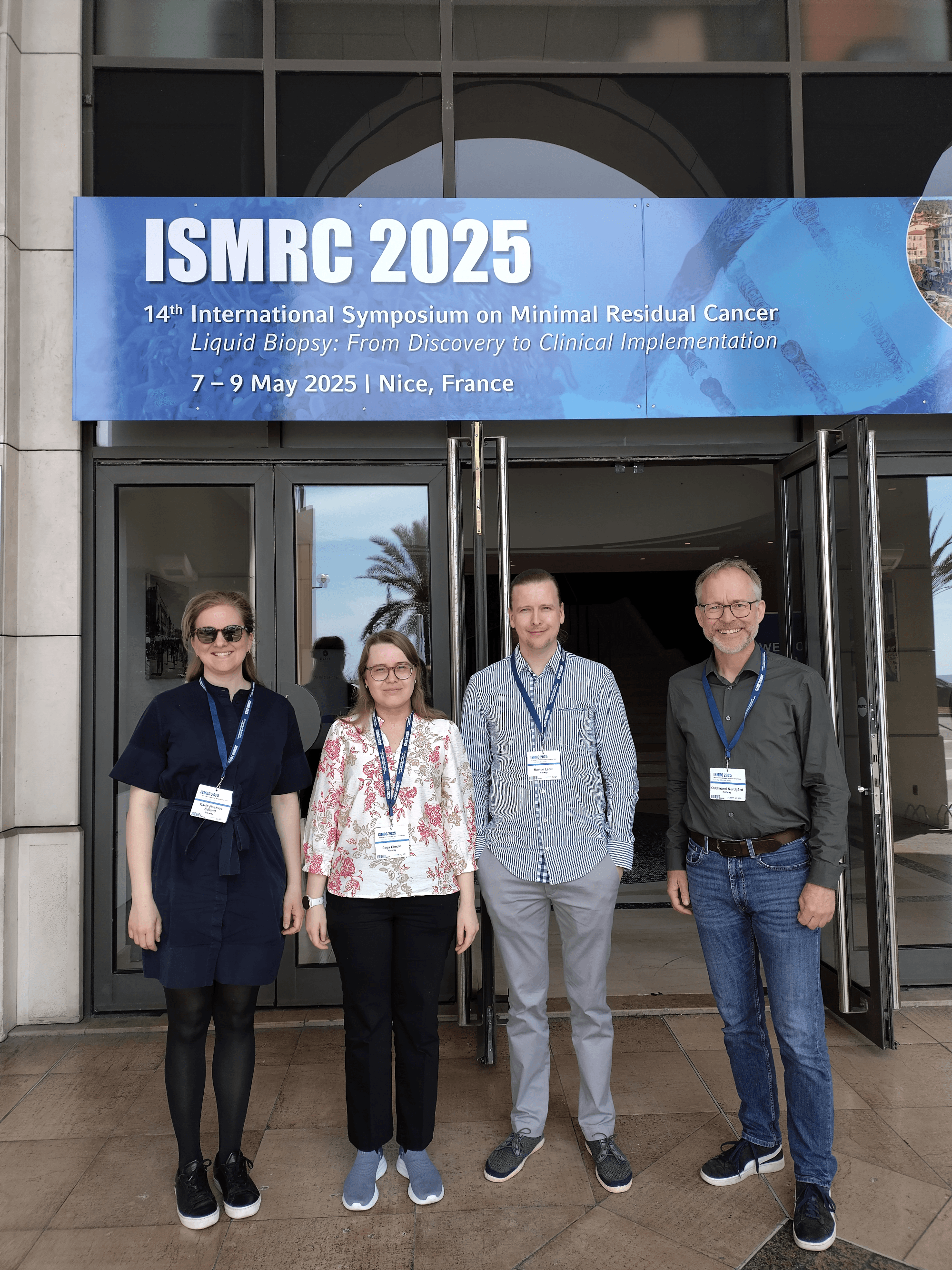
KNEP researchers from Stavanger University Hospital presented new results last week at the ISMRC (International Symposium on Minimal Residual Cancer) research conference in Nice, France. The results showed a slight improvement in the detection of cancer DNA in blood by using the new methods.
We will get back to you ASAP via email.